Textile Heritage of Bengal: A Journey Through Sonamukhi’s Handloom Tradition


West Bengal is celebrated for its rich cultural heritage. This includes a wide range of traditional crafts and performing arts. These are particularly practiced by rural communities. Among these, the handloom sector holds a special place. It forms a vital part of the rural economy, especially in the historic region of “Mallabhum.” This area is renowned not only for its terracotta temples but also for its contribution to the textile industry.
The Handloom Legacy in Mallabhum: A Lifeline for Rural Economy

The handloom sector in Mallabhum is the second-largest employment generator in the region’s rural economy. It provides livelihoods to about 30,000 weavers. The areas of Bishnupur, Sonamukhi, Bankura, and neighboring villages are the major hubs for this traditional craft. Cotton is a common material. However, the region is particularly famous for its silk. Varieties like Baluchari, Swarnachari, and Tassar silk are produced predominantly in Bishnupur and Sonamukhi.
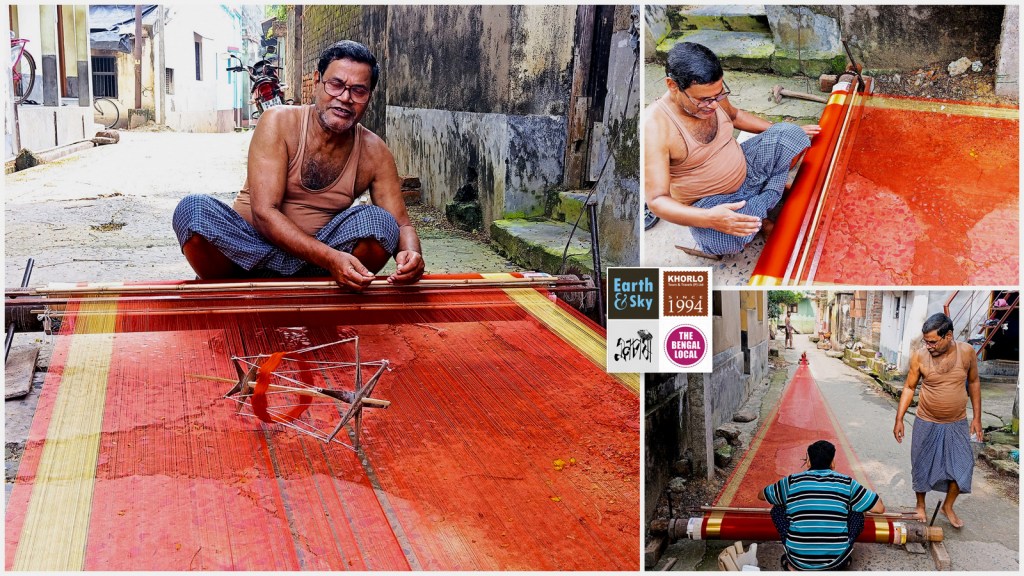
Sonamukhi: A Weaving Hub with a Rich History

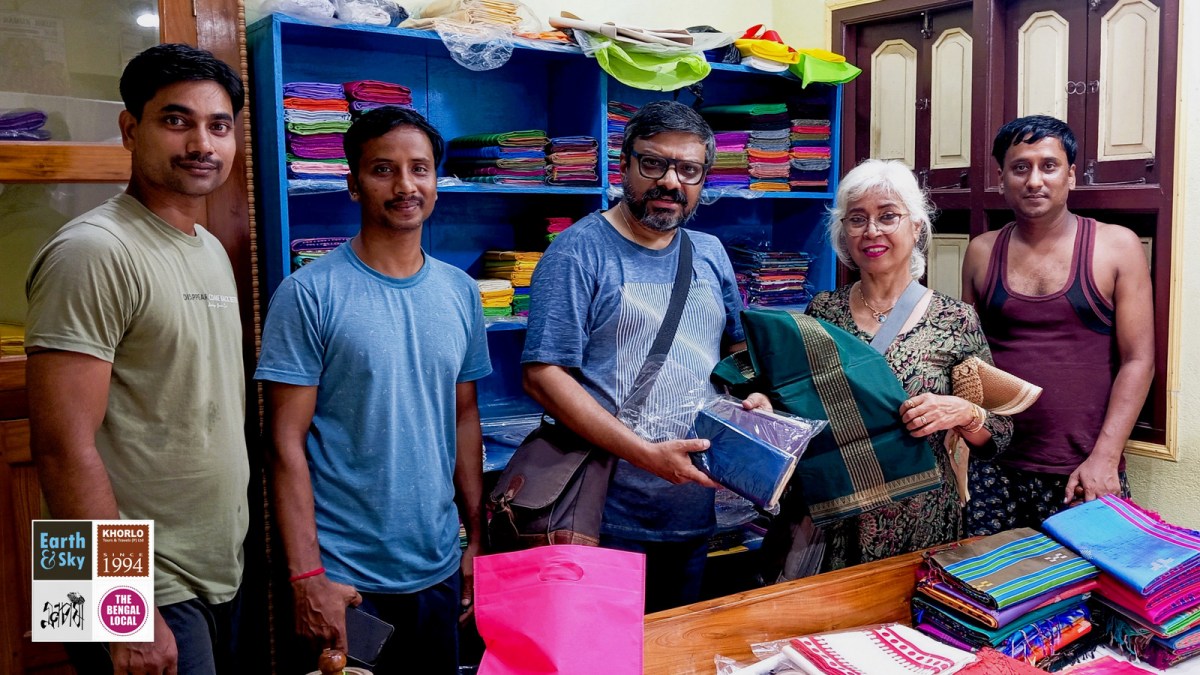
Sonamukhi has a long history as a center for weaving and textile trade. Its references date back centuries in various manuscripts and historical records. Many of these records include those from the time of the East India Company. It has long been known as a “village of weavers.” Generations have practiced the craft of silk and cotton weaving here. Historically, Sonamukhi was a bustling trading center, providing textiles to different parts of the region and beyond.

Today, the town still thrives on its weaving traditions, with approximately 1,000 handlooms actively in use. Many regions have transitioned to power looms. Nonetheless, Sonamukhi remains rooted in its handloom tradition. Artisans create intricate designs on yarn using the traditional “tant” (loom). The weavers work meticulously. They sit in front of the yarn, weaving their patterns. They create fabrics that are as beautiful as they are unique.

Sonamukhi Silk: The Pride of the Region

One of the most significant contributions of Sonamukhi to West Bengal’s textile industry is its eponymous “Sonamukhi Silk.” This variety of silk is known for its fine quality. The craftsmanship makes it a sought-after material for traditional sarees and other garments. The creation process of Sonamukhi Silk is labor-intensive. It involves a series of steps that showcase the weavers’ skill and ability.
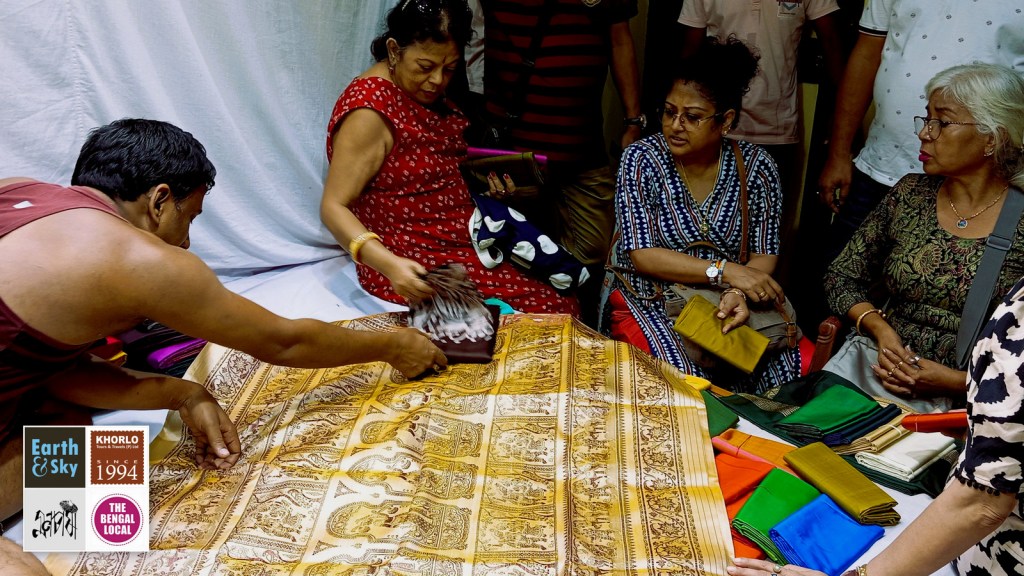
The Art of Weaving: From Yarn to Fabric

The journey of transforming raw silk into a finely woven fabric involves several meticulous steps:

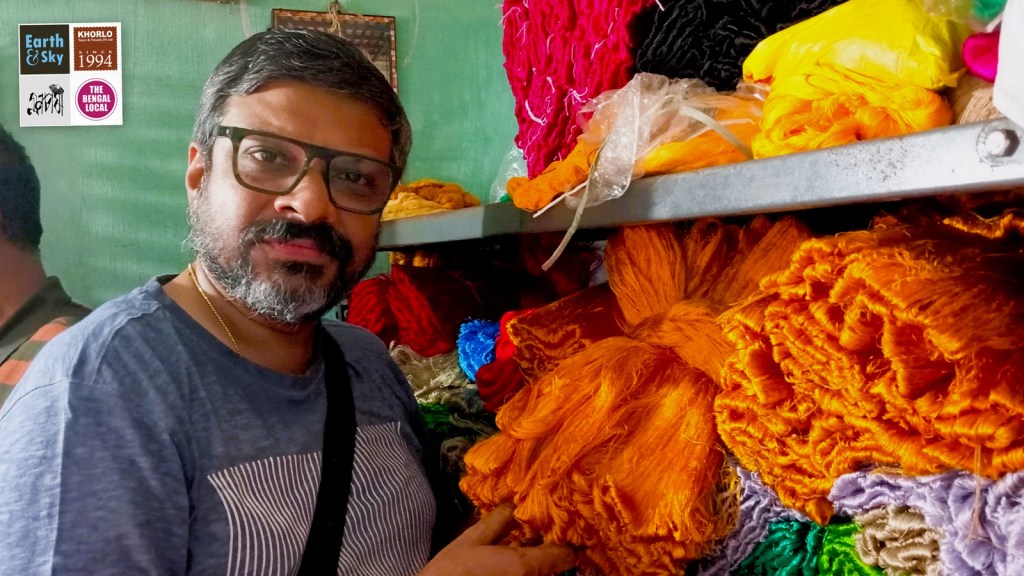
Choosing the right quality of raw silk is crucial to the weaving process. Then the raw silk is processed into yarn, preparing it for further treatment. Next step is dyeing in vibrant colors using traditional techniques, adding life to the fabric. The dyed yarn is then wound onto bobbins and prepared for the loom. After that to guarantee durability, warp yarns are treated before weaving. The final weaving process occurs on traditional handloom. Artisans bring their designs to life with each thread they weave. The result is a variety of silk products. These are not just textiles, but artistic creations that show the cultural heritage of Sonamukhi.

A Visit to Sonamukhi Weavers: Why It Matters

Visiting Sonamukhi offers a unique opportunity to experience the region’s rich textile tradition firsthand. It’s like stepping back in time. Handloom and skilled artisans defined the essence of Bengal’s weaving culture in that era. While Bishnupur is more famous for its temples, Sonamukhi provides a quieter and more intimate connection with Bengal’s heritage. It offers a chance to witness the intricate craft of silk weaving in person.

Sonamukhi is a treasure trove waiting to be discovered for those with an interest in textile history. It also captivates anyone with a love for authentic craftsmanship. A visit to the town allows travelers to see the process of silk weaving up close. They can explore workshops where these beautiful fabrics are made. Visitors also appreciate the dedication of the artisans who keep this ancient tradition alive.
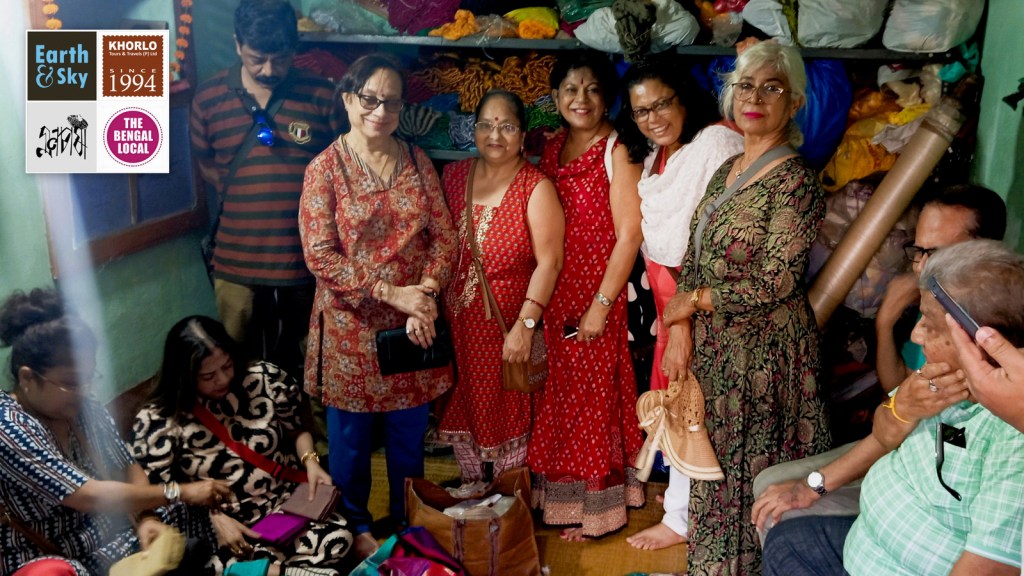
Preserving a Dying Art: The Role of Tourism

In today’s fast-paced world, modern machines and mass production have taken over. As a result, traditional handloom weaving is at risk of fading away. Many artisans struggle to sustain their craft amidst economic challenges and competition from machine-made products. Travelers can contribute to this valuable heritage by visiting places like Sonamukhi. They support local artisans and their families.

Tourism not only helps boost the local economy but also raises awareness about the cultural significance of handloom weaving. It provides artisans with a platform to share their stories, techniques, and passion with a wider audience. This ensures that the rich tradition of Sonamukhi Silk continues to thrive.
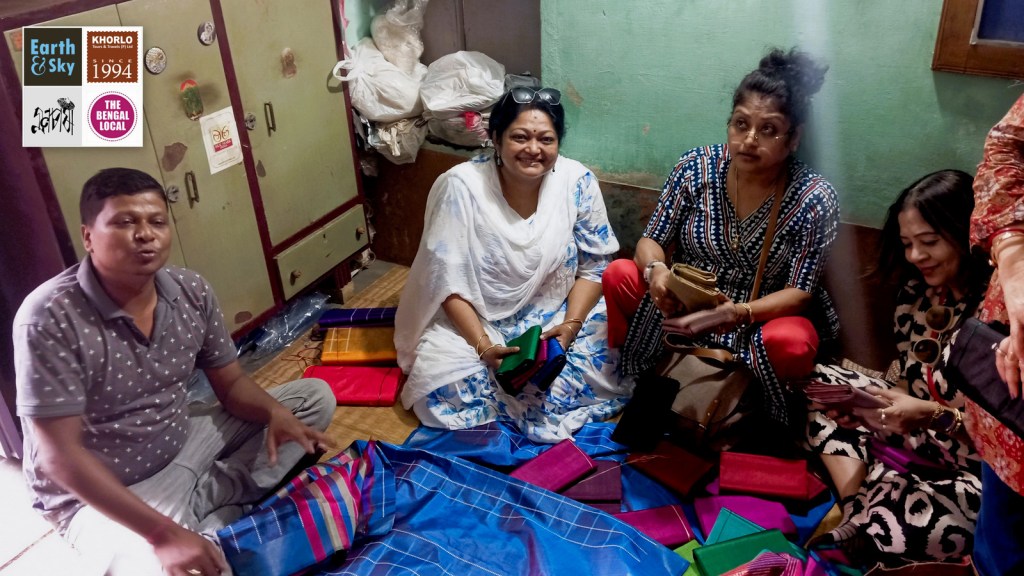
Planning Your Cultural Journey: Why Choose Sonamukhi?

Sonamukhi offers a unique blend of history, art, and cultural exploration. You be captivated by the intricate carvings of its terracotta temples. Alternatively, you appreciate the exquisite craftsmanship of its silk weavers. A visit to this town is sure to leave a lasting impression. It’s a destination that promises a glimpse into the past. It offers an experience that connects you to the enduring spirit of West Bengal’s traditional arts.
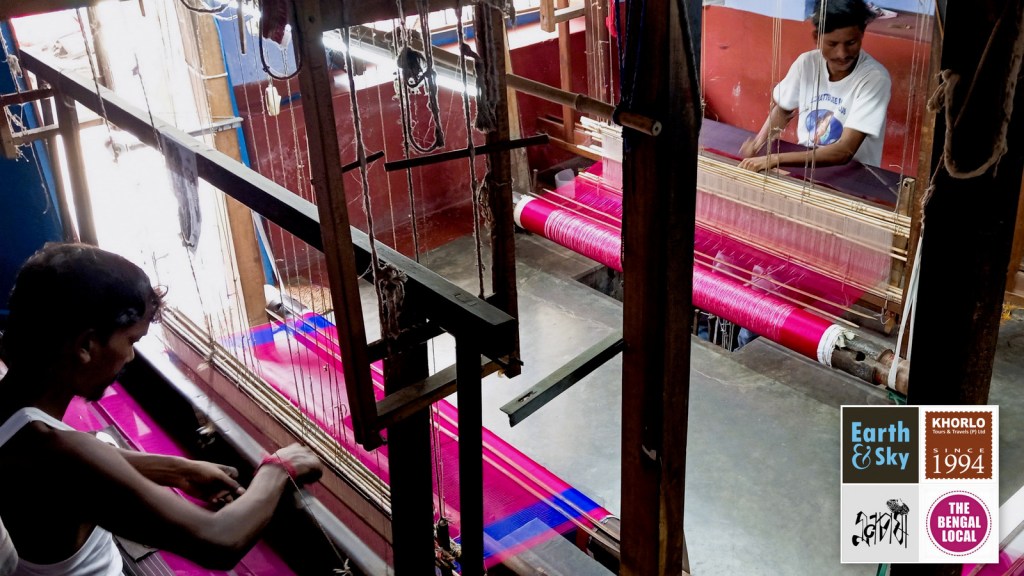
So, if you’re planning your next cultural trip, consider adding Sonamukhi to your list. It’s a place where history and art fuse with the delicate art of weaving. They create a rich tapestry of cultural experiences. The looms still hum with stories of the past. They carry the vibrant threads of Bengal’s glorious textile heritage.

Experiential Tour Assistance: Earth & Sky
WhatsApp Number: +91 94774 84136
Email ID: bengallocal@gmail.com
Website: https://www.thebengallocal.com

Five Offbeat Destinations in West Bengal for Adventurous Travelers


West Bengal, known for its diverse landscapes and rich cultural heritage, offers much more than its popular tourist spots like Kolkata, Darjeeling, or the Sundarbans. For travelers seeking unconventional experiences, the state is home to a range of offbeat destinations that combine natural beauty, history, and tranquility. From hidden hill towns to ancient ruins, these lesser-known spots are perfect for those looking to explore West Bengal beyond the beaten path.

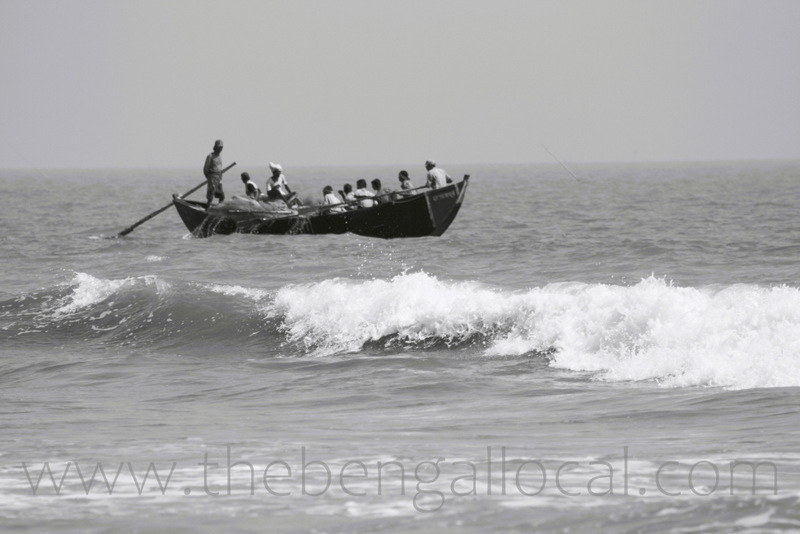
Shankarpur – The Unspoiled Beach Escape For beach lovers looking to avoid the crowded shores of Digha, Shankarpur is an idyllic alternative. Located around 14 kilometers from Digha, this quiet beach destination is known for its pristine sands, swaying casuarina trees, and serene atmosphere. Shankarpur is largely untouched by commercial tourism, making it a great spot for solitude, long walks by the sea, and fresh seafood straight from the fishermen’s boats. It’s an ideal getaway for those who want to relax by the Bay of Bengal without the hustle and bustle of more popular beaches. Accommodation: Govt. Property Kinara & Tatini by Benfish Lodges (West Bengal Fishery Department), Pvt Property Nest & etc. Contact for Reservation Assistance 9477476376 (WA)

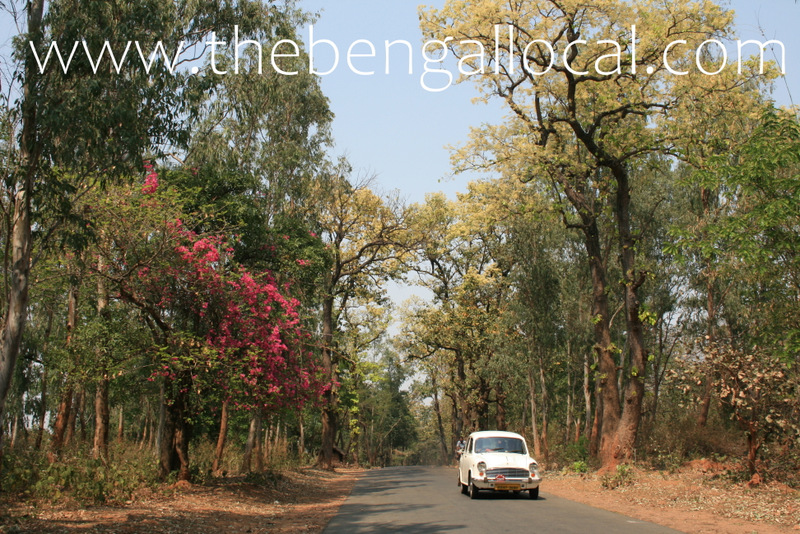
Garh Panchkot – A Historical Retreat Nestled at the foot of the Panchet Hill in the Purulia district, Garh Panchkot is a hidden gem that blends history with natural beauty. The ruins of the Panchkot Palace, dating back to the 16th century, are a major draw for history enthusiasts. Surrounded by lush forests and hilly terrain, Garh Panchkot is a peaceful retreat for those who enjoy trekking, birdwatching, or simply immersing themselves in nature. The nearby Panchet Dam adds to the scenic beauty of the area, making it a perfect offbeat destination for travelers seeking a mix of history and tranquility. Accommodation: Govt. Property Nature Resort by West Bengal Forest Department (WBFDC), Pvt Property Panchet Residency & etc. Contact for Reservation Assistance 9477476376 (WA)

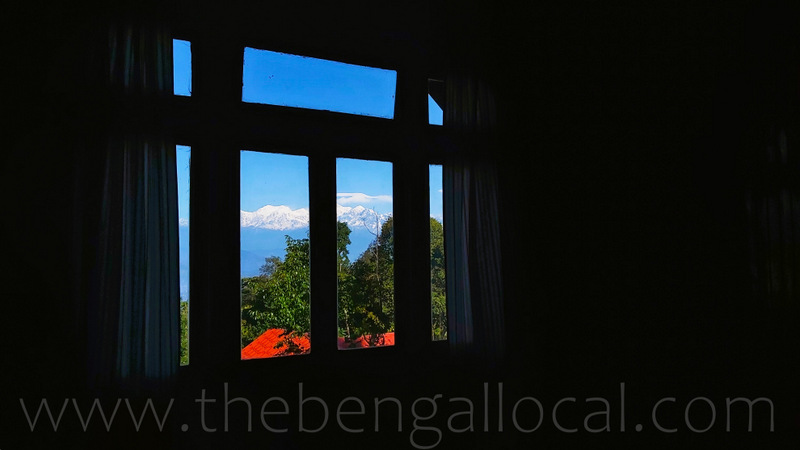
Tinchuley – A Secluded Hill Hamlet For travelers who love the mountains but want to avoid the more touristy spots like Darjeeling or Kalimpong, Tinchuley offers a serene alternative. This small village, located around 32 kilometers from Darjeeling, is tucked away in the lap of the Eastern Himalayas. Tinchuley is known for its panoramic views of the Kanchenjunga range, peaceful tea gardens, and fruit orchards. It’s an excellent destination for eco-tourism, with homestays offering a warm local experience. The calm atmosphere, fresh mountain air, and stunning landscapes make it a perfect spot for nature lovers. Accommodation: Home Stay: Gurung Guest House, Classic Guest House etc Contact for Reservation Assistance 9477476376 (WA)

Gajoldoba – A Birdwatcher’s Paradise Gajoldoba, located on the banks of the Teesta River near Jalpaiguri, is an offbeat destination that’s a haven for birdwatchers. This lesser-known wetland is home to a variety of migratory birds, especially during the winter months, attracting birdwatchers and wildlife photographers from across the country. The serene waters of the Teesta Barrage also provide opportunities for boating and angling. With the majestic backdrop of the Himalayas, Gajoldoba is ideal for travelers seeking a peaceful, nature-centric getaway far from the crowds. Accommodation: Bhorer Alo by West Bengal Tourism Department (WBTDC). Contact for Reservation Assistance 9477476376 (WA)

Mukutmanipur – A Scenic Reservoir Town Mukutmanipur, situated in the Bankura district, is a scenic town built around the second-largest earthen dam in India. The Mukutmanipur Dam, constructed at the confluence of the Kangsabati and Kumari rivers, forms a large reservoir surrounded by lush hills, offering stunning views and calm waters. The area is perfect for boating, trekking, and picnics, and the nearby forests are home to a variety of wildlife. Mukutmanipur’s peaceful atmosphere and beautiful surroundings make it a great offbeat destination for travelers seeking to unwind in nature. Accommodation: Govt. Property Nature Resort by West Bengal Forest Department (WBFDC). Pvt Lodges: Peerless Resort, Aparajita & Amrapali, Mili Resort etc. Contact for Reservation Assistance 9477476376 (WA)

These offbeat destinations in West Bengal provide unique travel experiences for those who want to step off the traditional tourist trail. From coastal retreats to mountain hamlets, these hidden gems showcase the diverse beauty and culture of the state, offering an alternative perspective for adventurous explorers.

Reservation Assistance: Earth & Sky
WhatsApp Number: +91 94774 84136
Email ID: bengallocal@gmail.com
Website: https://www.thebengallocal.com

Bengal :: History

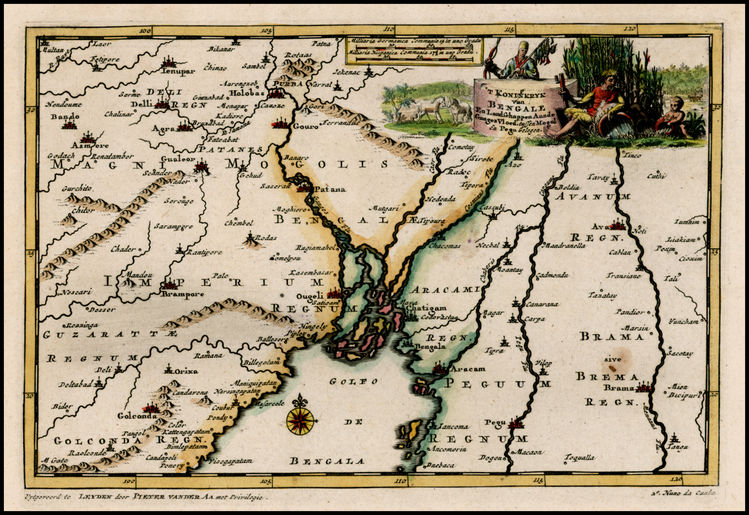
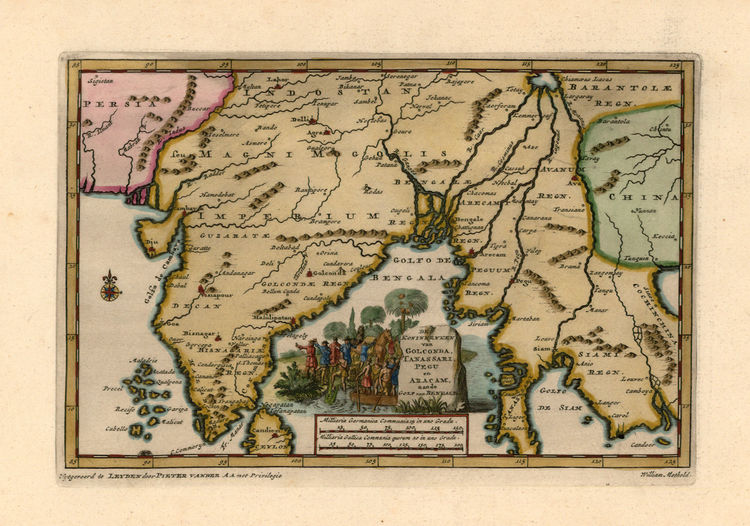
The State has the alluvial plains known as the “dooars” in the South & the mountainous Himalaya in the North. The diversed geography of Bengal is always fascinating. The Darjeeling district is known as her scenic beauty & the tea. The dence forest region of Dooars is renowned by its collection of rich flora & fauna. The alluvial plains in the South are the basin of river Damodar, also known as the “Sorrow Of Bengal”. Other main rivers are Ganga & Hoogly. The coastal fringes of Midnapore have a curios mix of large shifting sand dunes & marshes. The district 24 pargana (South) has Sundarbans, the largest delta consists of swamps, quick sand & thick, impenetrable mangrove forest belt.


The region has its beginning in the Vedic times and was known as Vanga. The Aryans settled here after the Vedic period and many principalities and kingdoms were formed. The dynasties of Palas, the Pundras, Guptas, Mauryas and the Sens ruled over the region before the Mughals took control. The strategic location led to trade with the South East Asian countries especially Cambodia, Thailand and Myanmar. Muslim influence was responsible for a rich culture and art. The ease of access brought the Portuguese, Dutch and French influence to its art and culture. The British successfully brought the modern education to Bengal and to this date, Calcutta has been considered the land of intelligentsia. No wonder that most of the Nobel Prizes for India have come from this State; Tagore, Bhabha, Mother Teresa and Amartya Sen.

The State has the alluvial plains known as the “dooars” in the South & the mountainous Himalaya in the North. The diversed geography of Bengal is always fascinating. The Darjeeling district is known as her scenic beauty & the tea. The dence forest region of Dooars is renowned by its collection of rich flora & fauna. The alluvial plains in the South are the basin of river Damodar, also known as the “Sorrow Of Bengal”. Other main rivers are Ganga & Hoogly. The coastal fringes of Midnapore have a curios mix of large shifting sand dunes & marshes. The district 24 pargana (South) has Sundarbans, the largest delta consists of swamps, quick sand & thick, impenetrable mangrove forest belt.

The history of Bengal is intertwined with the history of the broader Indian subcontinent and the surrounding regions of South Asia and Southeast Asia. It includes modern-day Bangladesh and the Indian states of West Bengal, Tripura and Assam’s Karimganj district, located in the eastern part of the Indian subcontinent, at the apex of the Bay of Bengal and dominated by the fertile Ganges delta. The advancement of civilisation in Bengal dates back four millennia. The region was known to the ancient Greeks and Romans as Gangaridai, a powerful kingdom whose elephant forces led the withdrawal of Alexander the Great from Eastern India. The Ganges and the Brahmaputra rivers act as a geographic marker of the region, but also connects the region to the broader Indian subcontinent. Bengal, at times, has played an important role in the history of the Indian subcontinent. – WIKI

The area’s early history featured a succession of Indian empires, internal squabbling, and a tussle between Hinduism and Buddhism for dominance. Ancient Bengal was the site of several major Janapadas (kingdoms), while the earliest cities date back to the Vedic period. A thalassocracy and an entrepôt of the historic Silk Road, Ancient Bengal established colonies on Indian Ocean islands and in Southeast Asia; had strong trade links with Persia, Arabia and the Mediterranean that focused on its lucrative cotton muslin textiles. The region was part of several ancient pan-Indian empires, including the Mauryans and Guptas. It was also a bastion of regional kingdoms. The citadel of Gauda served as capital of the Gauda Kingdom, the Buddhist Pala Empire (eighth to 11th century) and Hindu Sena Empire (11th–12th century). This era saw the development of Bengali language, script, literature, music, art and architecture

Reservation: Khorlo Tours & Travels (Private) Ltd

We are officially approved by Ministry of Tourism, Government of India. We are Registered with Department of Tourism, Government of West Bengal. Also we are a Authorised Marketing Agent (AMA) of West Bengal Tourism Development Corporation – WBTDC, &  Benfish-in-Tourism Lodges)

Regarding Bank deposit please follow instructions as mentioned below:-

  • ICICI Bank Ltd, Middleton Street Branch, Kolkata 700071, West Bengal
  • Account Name: KHORLO TOURS & TRAVELS PRIVATE LIMITED
  • Account Number: 355005000049
  • RTGS / NEFT / IFSC /Code: ICIC0003550

Please check the rules of reservation & cancellation policy before booking. It is mandatory to carry any of the Identity cards (Voter Identity Card / Passport / PAN Card / Driving License / Photo ID card issued by Central / State Govt / Adhar Card). Both these will be examined at the time of check-in.